
The textile industry in Surat continues to grow rapidly, driven by increasing demand for high-quality digital fabric printing. Among the most efficient technologies powering this transformation is the sublimation printer machine, widely used for polyester fabric printing, custom merchandise production, and large-scale textile manufacturing.
For businesses looking to improve printing speed, reduce operational costs, and maintain consistent quality, investing in the right sublimation printing equipment has become essential. Modern machines equipped with advanced sublimation printer heads deliver high-resolution prints, faster production cycles, and reliable performance for industrial applications.
In this guide, we explore how sublimation printing technology works, the importance of printhead systems, and how businesses in Surat can benefit from adopting modern sublimation printer machines.
What is a Sublimation Printer Machine?
A sublimation printer machine is a specialized digital printing system designed to transfer dye-based inks onto polyester fabrics and coated materials using heat and pressure. In the sublimation process, the dye transforms directly from a solid state into a gas when heat is applied, enabling the color to bond deeply with polyester fibers.
This process results in prints that are:
- Highly durable
- Maintain vibrant color clarity
- Resist fading or cracking
- Remain stable even after repeated washing
Because of these advantages, sublimation printing has become widely used in textile production, sportswear manufacturing, fashion garments, home décor fabrics, and promotional merchandise.
Importance of Sublimation Printer Heads
The Sublimation Printer Head is one of the most critical components of the printing system. It controls ink droplet size, printing speed, and overall output quality.
Modern sublimation printer heads are designed to deliver:
- High-speed printing performance
Industrial printheads allow manufacturers to produce large volumes of fabric prints within tight production timelines.
- Precise ink placement
Advanced printhead technology ensures consistent color distribution and fine details in complex textile patterns.
- Reduced maintenance downtime
High-quality printer heads improve reliability and minimize machine stoppages during continuous production.
For textile businesses in Surat handling large-scale fabric printing, choosing machines equipped with durable and efficient sublimation printer heads can significantly improve production efficiency.
Industrial Applications of Sublimation Printing
Sublimation printing technology supports a wide range of industrial and commercial applications. Many manufacturers in Surat rely on sublimation printers to produce high-quality textile products for both domestic and export markets.
- Textile Fabric Printing
Sublimation printers are widely used for polyester fabric printing in industries such as fashion apparel, ethnic wear, and printed fabrics.
- Sportswear Manufacturing
Sports jerseys, activewear, and team uniforms often require vibrant and durable prints that withstand frequent washing and stretching.
- Home Furnishing Products
Curtains, cushion covers, bedsheets, and upholstery fabrics can be printed with high-resolution designs using sublimation technology.
- Promotional Merchandise
Custom items like mugs, flags, banners, bags, and branded accessories are also produced using sublimation printers.
Because of its versatility, sublimation printing enables businesses to expand into multiple product categories and increase revenue opportunities.
Choosing the Right Sublimation Printer Machine
Different production environments require different printing capacities. Industrial textile businesses often select machines based on printing width, production speed, and number of printheads.
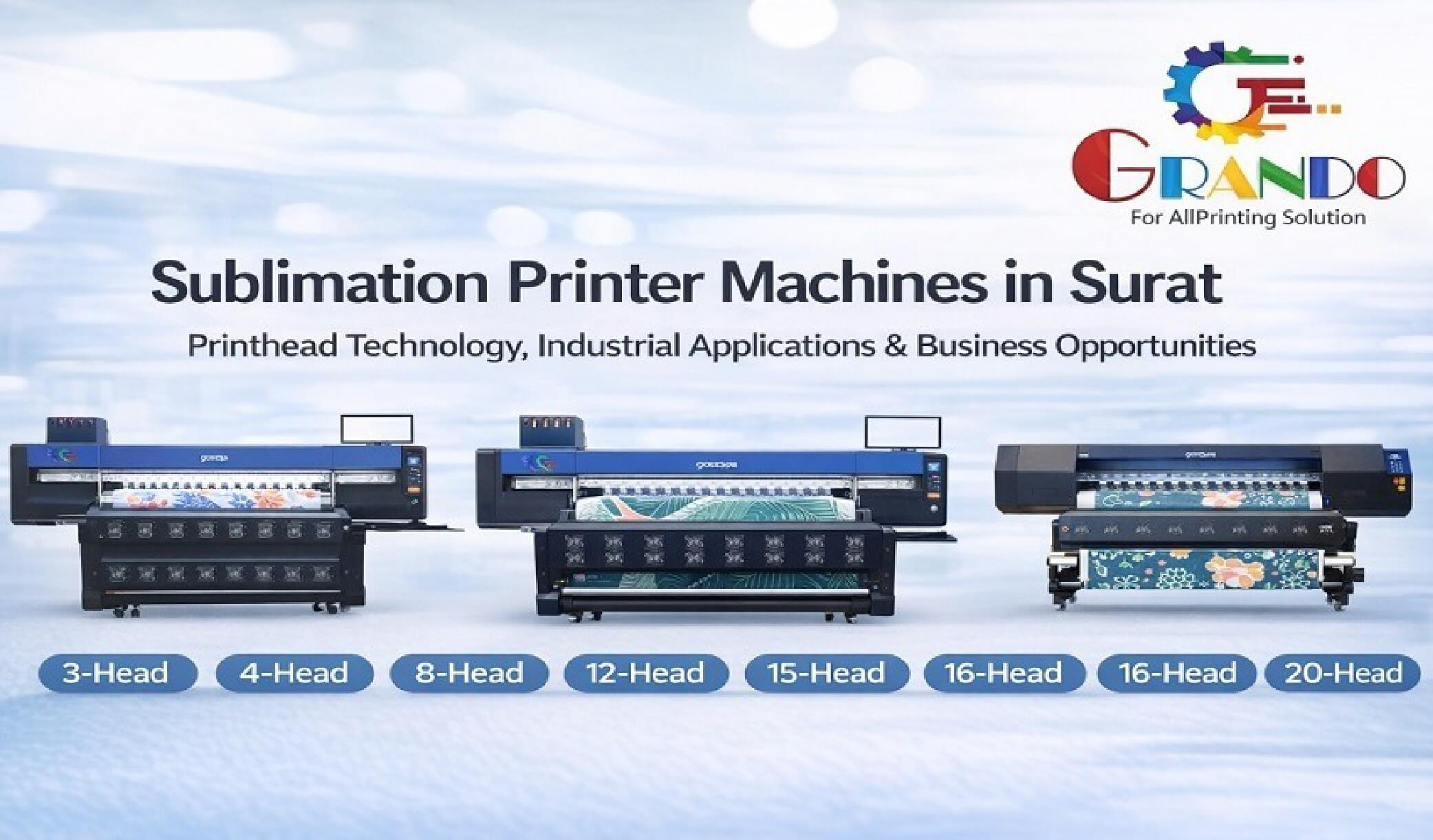
Grando offers a range of sublimation printer machines designed for various production scales:
- Sublimation Printer 3-Head
- Sublimation Printer 4-Head
- Sublimation Printer 8-Head
- Sublimation Printer 12-Head
- Sublimation Printer 15-Head
- Sublimation Printer 16-Head
- Sublimation Printer 20-Head
Machines with more printheads typically deliver higher output speeds, making them ideal for large-scale textile production units. Smaller configurations are suitable for growing printing businesses that want to expand their capabilities gradually.
By selecting the right machine configuration, manufacturers can optimize productivity while maintaining excellent print quality.
Pros and Cons of Sublimation Printer Machines
Pros:
- Sublimation printer machines offer several benefits for businesses, owners, and customers. One of the biggest advantages is the high-quality and vibrant print output. The ink becomes part of the fabric, which means the designs do not crack, peel, or fade easily, even after multiple washes. This makes sublimation printing ideal for garments, sportswear, and home textile products.
- Sublimation is ideally suited for printing on fabrics, particularly polyester. Something like custom t-shirts, jerseys, tote bags, or scarves can be produced with excellent detail and color quality. Clothing companies love this process because the prints are vibrant and last a long time.
- For business owners, sublimation printers allow fast production and bulk printing, especially when using multi-head machines, helping companies complete large orders efficiently. Another advantage is the smooth and professional finish of the prints, which customers appreciate because the fabric remains soft and comfortable.
- Additionally, sublimation printing is also an excellent way to create high-quality signage and promotional products, not just smaller items. From foam banners to posters to merchandise, the print quality is crisp, vibrant, and attention-grabbing.
- Additionally, sublimation printing is considered a clean and efficient digital printing method, making it suitable for modern textile businesses looking for consistent quality and scalable production.
- A sublimation printer is a great way to expand your product line. From apparel to giftware to promotional products, businesses can explore multiple revenue streams using a single printing system rather than investing in multiple machines.
Cons:
- Despite its advantages, sublimation printing also has a few limitations that businesses should consider. One major drawback is that sublimation technology performs best on polyester-based fabrics or materials that have a polymer coating, which limits its use on natural fabrics like pure cotton. The initial investment cost can also be higher for business owners because industrial sublimation printers, heat transfer equipment, inks, and paper require a significant setup budget.
- Another limitation is that sublimation printing generally works better on light-colored fabrics, as the inks are transparent and may not appear clearly on dark materials. In addition, businesses need proper machine maintenance and trained operators to ensure consistent print quality and avoid production downtime. Even with these challenges, sublimation printing remains one of the most efficient and profitable printing technologies for textile production when used with the right materials and equipment.
Steps to Start a Sublimation Printing Business
With the textile market expanding rapidly, many entrepreneurs in Surat are exploring opportunities in sublimation printing businesses. Starting a sublimation printing operation requires careful planning, the right equipment, and a clear business strategy.
1. Market Research and Niche Selection
Before investing in equipment, it is important to understand the target market.
Some popular sublimation printing niches include:
- Polyester fabric printing
- Sportswear and jerseys
- Custom fashion garments
- Home furnishing fabrics
- Promotional merchandise
- Corporate branding products
Studying local demand in Surat’s textile industry helps businesses identify profitable opportunities and competitive pricing strategies.
2. Equipment Acquisition
Choosing the right equipment is one of the most critical decisions for a sublimation printing business.
Industrial printing setups typically include:
- Sublimation printer machine
- Heat transfer calendar machine
- Sublimation inks
- Sublimation transfer paper
- Computer design software
Businesses that plan to scale production often invest in multi-head sublimation printers to achieve higher printing speeds.
3. Set Up Operations
After acquiring the equipment, businesses must create an efficient printing workflow.
This includes:
- Setting up the printing area
- Installing printer software and RIP systems
- Training operators to manage the machines
- Ensuring proper ink and paper handling
- Maintaining consistent temperature control for heat transfer
A well-organized production setup ensures smooth operations and consistent printing quality.
4. Marketing and Sales Strategy
Marketing plays a crucial role in the success of any sublimation printing business. To promote your products effectively, it is important to understand your target customers. By researching who buys your products, their preferences, and how they make purchasing decisions, businesses can create designs and products that better match market demand.
Effective marketing strategies include:
- Building a professional website
- Listing services on B2B marketplaces
- Connecting with garment manufacturers
- Partnering with textile exporters
- Promoting services through social media
- Offering custom printing services for local brands
In Surat’s competitive textile market, strong marketing efforts help businesses secure long-term clients.
5. Loans, Finance, and Workforce
Starting a sublimation printing business may require financial planning and workforce management.
Important considerations include:
- Equipment financing or business loans
- Working capital for raw materials
- Hiring trained machine operators
- Production management staff
- Maintenance technicians
6. Growth and Business Expansion
Once the printing operation becomes stable, businesses can scale their production and explore new markets.
Expansion strategies include:
- Upgrading to multi-head high-speed sublimation printers
- Offering new product categories
- Expanding export operations
- Adding automated production systems
- Investing in advanced printhead technology
With the right equipment and business strategy, sublimation printing businesses in Surat can grow rapidly and capture opportunities in both domestic and international markets.
Sublimation Printer Machine Price Considerations
The sublimation printer machine price varies depending on several factors, including:
- Number of printheads
- Printing width and speed
- Ink system technology
- Machine durability and build quality
- Production capacity
Businesses should consider long-term production needs when choosing a machine rather than focusing solely on initial investment. High-performance industrial printers often deliver better return on investment through faster production and reduced maintenance costs.
Why Surat Businesses are Adopting Sublimation Printing
Surat is known as one of India’s largest textile manufacturing hubs. With increasing competition in the textile market, manufacturers are shifting toward digital printing technologies that allow them to produce unique designs quickly and efficiently.
Sublimation printing offers several advantages for textile businesses in Surat:
- Faster production turnaround
- Lower inventory requirements
- Ability to print custom designs on demand
- High-quality prints suitable for export markets
- Reduced water consumption compared to traditional printing methods
These benefits make sublimation printing an attractive solution for modern textile manufacturers looking to scale their operations.
Looking for a high-performance sublimation printer machine in Surat?
Grando provides industrial sublimation printing solutions designed for speed, precision, and long-term reliability. Whether you need a 3-head printer for growing production or a 20-head industrial machine for high-volume textile printing, our team can help you choose the right equipment for your business.
Contact Grando today to explore advanced sublimation printer machines and take your textile printing production to the next level.
FAQ
1. Is the sublimation printing business profitable?
Ans: Yes, sublimation printing can be highly profitable when businesses target the right markets, such as textile printing, sportswear manufacturing, and promotional merchandise. High demand and customization opportunities make it a growing industry.
2. What temperature and time settings are ideal for sublimation?
Ans: Most sublimation transfers work best at temperatures between 180°C and 200°C for around 30–60 seconds, depending on the material and transfer equipment.
3. Are there any safety precautions for sublimation printing?
Ans: Yes. Operators should ensure proper ventilation, handle heat press machines carefully, wear protective gloves when necessary, and follow manufacturer guidelines for safe machine operation.
4. What fabrics are best suited for sublimation printing?
Ans: Sublimation printing works best on polyester fabrics and polymer-coated materials, as these surfaces allow the dye to bond effectively during the heat transfer process.
5. How long do sublimation prints last on fabrics?
Ans: Sublimation prints are extremely durable because the ink becomes part of the fabric rather than sitting on top of it. As a result, the designs do not crack, peel, or fade easily, even after repeated washing.