
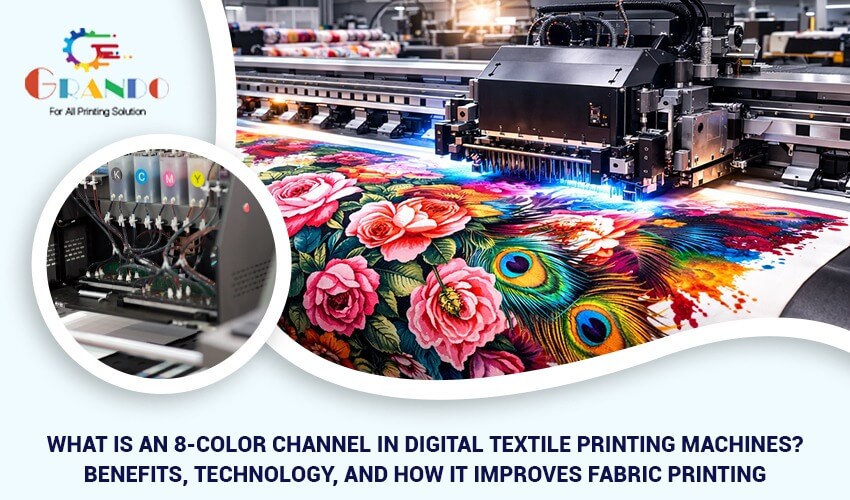
The textile industry continues to evolve as manufacturers adopt advanced digital technologies to improve production efficiency and print quality. One of the most powerful innovations in this field is the 8-color digital textile printing machine. Compared to traditional printing systems, this advanced digital textile printing machine uses an expanded ink configuration that delivers richer colors, smoother gradients, and more detailed fabric designs.
A modern digital textile printing machine typically uses the CMYK color model. However, an 8-color digital textile printing machine includes four additional channels: light cyan, light magenta, orange, violet, and grey. These additional inks increase the printable color range and reduce visible banding, allowing businesses to produce high-resolution textile designs.
Across India’s growing textile sector, many manufacturers are upgrading to digital textile printers because they offer faster production, improved design flexibility, and better color accuracy. From fashion garments to home décor fabrics, 8-color digital textile printing machines play an important role in modern fabric printing technology.
Types of 8-Color Digital Textile Print Machines
An 8-color digital textile printing machine offers enhanced color gamut, improved color accuracy, and superior print quality by using a wider range of inks. These advanced digital textile printers are ideal for producing vibrant prints for fashion, décor, and promotional products.
Selecting the right digital textile printing machine in India depends on production scale, fabric type, and application requirements.
Industrial Inkjet Printers
Industrial digital textile printing machines are engineered for high-volume textile manufacturing.
Advantages:
- Fast production that can be used for large-scale production
- Reproduction of color constancy in large fabric quantities
- Compatible with various fabrics such as cotton, silk, and polyester
- Durable design suitable for continuous factory operation
Limitations:
- Higher initial investment cost
- Requires dedicated installation space
- Needs trained operators and regular maintenance
Best for: Large textile manufacturers, contract printing companies, and high-volume fashion production.
Direct-to-Fabric (DTF) Printers / DTF Garment Printing
Direct-to-Fabric printers, often used for DTF garment printing, are designed to print directly onto textiles or onto transfer films that are later applied to garments. These machines are popular with custom apparel manufacturers and small-to-medium printing businesses.
Advantages:
- Ideal for custom apparel and garment printing
- Allows on-demand production with quick design changes
- Supports vibrant prints and detailed designs
- Suitable for small batch or personalized orders
Limitations:
- Slower production speed compared to industrial textile printers
- Limited fabric width compared to large textile machines
- Requires proper curing and transfer processes
Best for: Custom t-shirt printing businesses, garment manufacturers, and print-on-demand apparel brands.
Key Features of 8-Color Digital Textile Print Machines
Modern 8-color digital textile printing machines are designed to deliver high-quality fabric printing with better color accuracy and production efficiency. These machines are widely used by textile manufacturers who need reliable and consistent printing results.
Here are some important features that make these machines valuable in textile production:
- Expanded color gamut
The additional ink channels beyond CMYK allow the printer to produce richer and more vibrant colors. This helps in printing detailed patterns, smooth gradients, and complex textile designs. - High-resolution fabric printing
An 8-color digital textile printing machine can produce sharp images and detailed patterns on different types of fabrics, making it ideal for premium textile applications. - Consistent color reproduction
Advanced printing technology ensures that colors remain consistent across multiple fabric batches, which is essential for fashion brands and textile manufacturers. - Fast production speed
Many digital textile printers are designed for continuous production, allowing businesses to print large quantities of fabric efficiently. - Wide fabric compatibility
These machines can print on various fabrics such as polyester, cotton, silk, and blended textiles, depending on the ink type and printer configuration. - Advanced ink management system
Modern textile print machines use smart ink delivery systems that help reduce ink wastage and maintain stable printing quality. - User-friendly software control
Most digital textile printing machines in India come with advanced RIP software that helps manage color profiles, printing settings, and design accuracy. - Durable industrial design
Industrial-grade machines are built for long production cycles and can operate reliably in textile manufacturing environments.
These features make 8-color digital textile printing machines an excellent choice for businesses looking to improve print quality while maintaining production efficiency.
Commercial Uses of 8-Color Digital Textile Printing Machines
The versatility of 8-color digital textile printing machines allows them to serve multiple industries.
1. Fashion Industry
The fashion industry thrives on creativity and rapid production. Advanced digital textile printing machines allow designers to create detailed patterns and photorealistic prints with high color accuracy.
- Rapid prototyping: Designers may quickly create sample fabrics for new collections.
- On-demand manufacture: Reduces waste and promotes sustainable fashion manufacturing.
- Custom collections: Brands may create limited-edition prints or region-specific designs.
- Personalized apparel: Retailers may design clothing with unique prints.
Key advantage: Faster time-to-market helps fashion brands respond quickly to changing trends.
2. Home Décor
Interior designers and home décor manufacturers use digital textile printing machines to create decorative fabrics for homes, hotels, and commercial spaces.
- Printed curtains and drapery
- Decorative upholstery fabrics
- Cushion covers and bedding materials
- Custom wallpaper and fabric wall panels
- Tablecloths and home textile accessories
These applications require precise colors and high-resolution patterns, which 8-color digital textile printing machines can easily deliver.
3. Automotive Industry
Automotive interiors often require printed fabrics for seat covers, decorative panels, and upholstery materials. Digital textile printing machines in India are increasingly used to produce durable and visually appealing automotive textiles. The automotive sector also uses digital textile printers for printing specialized fabrics used in vehicle interiors.
- Seat cover fabrics
- Interior panel textiles
- Decorative automotive upholstery
- Custom interior design fabrics
Digital printing technology helps manufacturers create consistent patterns and durable prints suitable for automotive use.
4. Promotional Products
Many businesses use textile print machines to produce promotional materials and branded fabric products.
- Printed flags and banners
- Event backdrops and stage fabrics
- Corporate promotional textiles
- Branded exhibition displays
- Custom promotional merchandise
Using a digital textile printing machine in India, businesses can produce promotional textiles quickly and with vibrant color quality.
5. Additional Commercial Applications
Other industries benefiting from 8-color digital textile printing machines include:
- Sportswear and performance apparel manufacturing
- Hospitality textiles, such as hotel linens and decorative fabrics
- Event décor and exhibition printing
- Custom fabric production for designers and artists
How To Choose the Right 8-Color Digital Textile Printing Machine
Selecting the right digital textile printing machine requires evaluating several important factors.
1. Production capacity
Businesses with high-volume production needs should choose industrial machines capable of continuous roll printing.
2. Fabric compatibility
Ensure the textile print machine supports the fabric types used in your production process.
3. Printhead technology
High-quality printheads improve color accuracy and machine durability.
4. Ink system
Consider ink compatibility, especially when comparing sublimation printer ink, textile pigment inks, or reactive inks.
5. Technical support
Reliable installation, maintenance services, and spare parts availability are essential for long-term operation.
6. Software and color management
Advanced RIP software helps maintain consistent print quality across multiple production runs.
Conclusion
The 8-color digital textile printing machine represents a major advancement in modern textile production. By expanding beyond the traditional CMYK color system, these machines deliver superior color accuracy, smoother gradients, and higher-resolution fabric prints.
As demand for customized and high-quality textile designs continues to grow, many manufacturers in India are investing in digital textile printers to improve efficiency and stay competitive. Whether used in fashion, home décor, or industrial textile production, the right digital textile printing machine in India can significantly enhance fabric printing capabilities.
Looking to upgrade your textile printing technology?
Grando offers advanced digital textile printing machines designed for modern fabric production. Whether you need high-volume manufacturing or precision textile printing, our machines help businesses achieve reliable performance and vibrant fabric prints.
Explore our digital textile printing machines today and take your textile production to the next level.
FAQs:
Q1) What is the main benefit of using an 8-color digital textile print machine?
Ans: The main advantage of an 8-color digital textile printing machine is its ability to produce a wider color gamut. With additional ink channels beyond CMYK, the printer delivers more accurate colors, smoother gradients, and higher-quality fabric prints.
Q2) Which businesses are these machines ideal for?
Ans: 8-color digital textile printers are ideal for fashion manufacturers, textile exporters, home décor producers, promotional product companies, and automotive fabric manufacturers that require high-resolution and vibrant fabric printing.
Q3) What aftermarket services are available for this textile print machine?
Ans: Most suppliers provide aftermarket services such as installation support, printhead maintenance, software updates, spare parts supply, and technical training to ensure smooth long-term machine performance.
Q4) Do these textile print machines use eco-friendly inks?
Ans: Many modern digital textile printing machines support eco-friendly inks such as water-based or low-VOC textile inks. These inks reduce environmental impact while maintaining strong color quality and durability.