
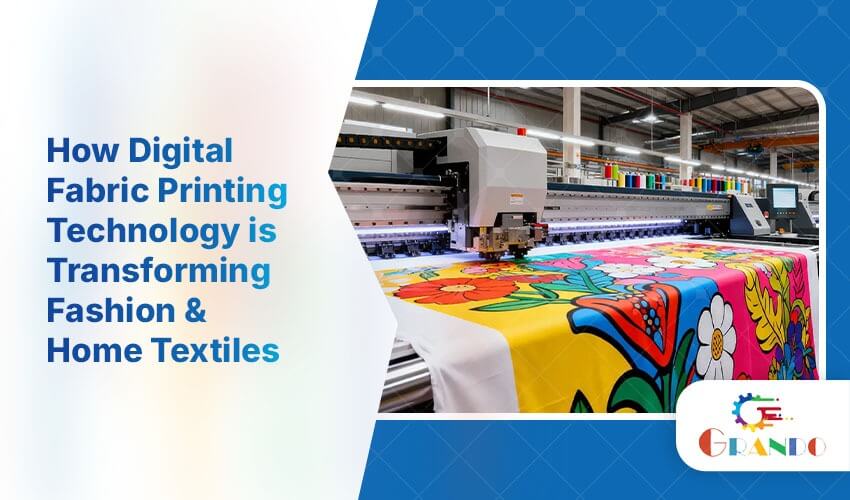
The textile industry is undergoing a fundamental shift — and digital fabric printing is driving it.
In Surat, India’s largest synthetic fabric manufacturing hub, businesses are rapidly moving away from conventional screen printing and towards advanced digital fabric printing machines. The demand is no longer limited to large mills. Boutique fashion labels, home textile exporters, and fabric processors across the city are adopting this technology for one simple reason: it delivers better output, faster turnaround, and lower waste—without requiring proportional increases in capital or floor space.
As textile manufacturers across Surat and India face increasing demand for customization, export-quality production, and faster delivery timelines, digital fabric printing is becoming the preferred solution for modern textile manufacturing.
What Is Digital Fabric Printing?
Digital fabric printing is a process that applies ink directly onto fabric using high-precision inkjet technology—with no screens, no plates, and no lengthy setup time. A digital design file is sent directly to the textile fabric printing machine, which reproduces the image on the fabric with photographic-level accuracy in a single pass.
Unlike traditional screen printing—which requires a separate screen for each color—digital printing handles unlimited colors simultaneously. This makes it commercially viable for complex patterns, photorealistic prints, gradient artwork, and short-run customized orders that are uneconomical with conventional methods.
Modern digital fabric printing technology is widely used in fashion textiles, home furnishing fabrics, sportswear, ethnic wear, upholstery, and customized textile manufacturing.
Digital Fabric Printing vs Traditional Screen Printing
| Feature | Traditional Screen Printing | Digital Fabric Printing |
|---|---|---|
| Setup Time | High | Very Low |
| Colour Limitations | Limited | Unlimited |
| Sampling Speed | Slow | Fast |
| Short-Run Orders | Expensive | Cost-Effective |
| Water Usage | Higher | Lower |
| Design Flexibility | Moderate | Very High |
| Custom Printing | Difficult | Easy |
Digital textile printing has become the preferred choice for manufacturers that require faster sampling, design flexibility, lower waste, and efficient short-run production.
Why Is Digital Fabric Printing Growing So Fast in Surat?
Surat produces an estimated 40% of India’s synthetic fabric and is one of the most competitive textile markets in Asia. Speed, design variety, and cost efficiency are not optional here — they are survival requirements.
Digital fabric printing addresses all three. It removes the time-consuming screen preparation process, eliminates minimum order constraints, and allows manufacturers to fulfill custom and short-run orders profitably. For Surat’s market, where buyers expect fast sampling and frequent design changes, this technology is not a luxury — it is a competitive necessity.
The rapid growth of the global digital textile printing industry and increasing focus on sustainable textile manufacturing are also accelerating adoption across India’s textile sector.
How Digital Fabric Printing Is Transforming the Fashion Industry
The fashion industry operates on tight timelines. Trends shift within weeks, and brands that cannot respond fast lose orders to those who can.
-
Speed to Market
Conventional screen printing requires screen preparation, color matching, and multiple test prints before production begins — a process that can take several weeks. With a digital fabric printing machine, the same workflow moves from an approved design file to finished fabric in hours.
For fashion brands responding to trend windows or seasonal deadlines, this speed is a decisive advantage. Businesses investing in a proper textile digital printing machine setup can dramatically reduce production delays and improve delivery timelines.
-
Short-Run Profitability
Fashion designers and boutique labels frequently need quantities as low as 50 to 200 meters. Screen printing makes such runs expensive because setup costs remain fixed regardless of volume.
Digital printing has no setup cost, which means short-run orders are just as cost-efficient as bulk production.
-
Unlimited Design Capability
Digital printing removes the creative ceiling imposed by conventional methods. Unlimited colours, detailed patterns, and high-resolution designs are supported by digital fabric printing—giving designers complete creative freedom.
-
Smarter Inventory Management
On-demand digital printing allows brands to produce exactly what is needed, when it is needed. This directly reduces overproduction—one of fashion’s highest costs and sources of waste.
Looking for the Right Digital Fabric Printing Machine in Surat?
How Digital Fabric Printing Is Reshaping Home Textile Manufacturing
Home textiles — including bedsheets, curtains, cushion covers, upholstery fabrics, and table linen — represent one of India’s highest-value export segments. Surat’s proximity to major port infrastructure makes it a hub for home textile exporters, and digital fabric printing is changing how those manufacturers compete internationally.
Customization Without Minimum Orders
Export buyers, interior designers, and hospitality groups increasingly demand custom fabrics for specific projects. A hotel brand may require a signature room pattern. A retail buyer may need seasonal updates across a product line.
Digital printing makes these requests commercially viable without imposing large minimum order quantities.
Superior and Lasting Print Quality
Home textiles are subject to repeated washing, direct sunlight, and heavy use. Modern digital fabric printing machines use reactive, pigment, or sublimation inks that bond at a molecular level with the fabric—delivering vivid color, exceptional wash fastness, and long-term durability.
Manufacturers using advanced sublimation printing solutions and reactive textile printing systems can consistently achieve export-quality output with excellent colour performance.
Faster Sample Turnaround
In export and B2B textile sales, the speed of sampling often determines who wins the order. Digital printing compresses sample development from weeks to days, giving manufacturers a clear edge in competitive tenders and time-sensitive negotiations.
Measurable Sustainability Credentials
Why Textile Manufacturers in Surat Are Switching to Digital Printing
Textile manufacturers in Surat are rapidly adopting digital fabric printing to meet growing demand for faster production, customized fabric designs, and export-quality print consistency.
Unlike conventional printing methods, digital textile printing enables manufacturers to reduce setup time, improve colour accuracy, and handle small or bulk orders more efficiently.
With increasing pressure from fashion brands and export buyers for quick turnaround and sustainable production practices, digital printing technology is becoming a long-term competitive advantage for textile businesses across Gujarat and India.
What to Look for in a Digital Fabric Printing Machine
If you are searching for a digital fabric printing machine or digital fabric printing near me in Surat, understanding technical specifications ensures you invest in the right solution for your production needs.
Print Head Technology
The print head determines resolution, ink compatibility, and long-term reliability. Industrial-grade print heads from established manufacturers deliver consistent quality across extended production runs with lower maintenance requirements.
Modern industrial textile print head technology plays a major role in production stability and print precision.
Ink Compatibility
Different substrates require different ink chemistries—reactive inks for cotton and linen, acid inks for silk and nylon, sublimation inks for polyester and synthetics, and pigment inks for mixed-fiber fabrics.
Ensure the machine you select supports the ink types relevant to your specific product range.
Production Speed and Print Width
Machines are rated in linear meters per hour. Matching production speed and print width to your actual order volumes prevents both underutilization of capital and production bottlenecks during peak periods.
Businesses evaluating a Digital Textile Printer in Surat should compare production speed alongside long-term operating efficiency.
Pre-Treatment and Post-Treatment Capability
High-quality digital printing on natural fibres requires fabric pre-treatment before printing and steaming or washing after.
Invest in a complete line solution rather than a standalone printer — total output quality depends on the entire process, not just the print head.
Colour Management and RIP Software
Accurate, repeatable colour reproduction requires a reliable RIP (Raster Image Processor) and colour management system.
The best textile fabric printing machines come integrated with proven software ecosystems that streamline job management and reduce colour variation between runs.
Why After-Sales Support Determines Your Real Return on Investment
A textile fabric printing machine is a long-term capital investment. What happens after installation — not just during the sales process — determines whether that investment generates consistent returns.
Many buyers focus entirely on machine price and overlook the cost of downtime. In a production environment, an idle machine represents lost output, delayed deliveries, and damaged customer relationships.
The total cost of an unsupported machine over three years will consistently exceed the cost of a better-supported alternative.
Professional textile printing machine installation service and technical support directly affect production efficiency and long-term profitability.
Fabric Printing Solutions in Surat and Across India
For manufacturers and fabric processors in Surat searching for digital fabric printing near me, Grando provides the complete answer.
Whether you manufacture fashion fabric, home textiles, or specialized industrial textiles, Grando’s team works directly with you to recommend the right machine configuration for your output requirements and budget.
From initial consultation through installation, operator training, and ongoing service support, Grando is the partner that stays with you after the sale.
The Future of Textile Manufacturing in Surat Is Digital
Digital fabric printing is not a passing trend. It is a structural transformation in how textiles are designed, produced, and delivered to market.
The manufacturers who adopt this technology today will have a decisive production, quality, and cost advantage over those who delay.
For Surat’s textile businesses — already competing in one of the world’s most demanding markets — the transition to digital printing is the clearest path to sustainable growth.
Contact Grando today for machine consultation, live demonstrations, installation support, and complete textile printing solutions.
Frequently Asked Questions
Q1) What is digital fabric printing, and how does it work?
Ans: Uses industrial inkjet technology to print designs directly onto fabric from a digital file. Unlike screen printing, it requires no screens or plates, making it ideal for fast production, detailed designs, unlimited colours, and cost-effective short-run printing.
Q2) What is the difference between digital fabric printing and screen printing?
Ans: Screen printing requires a separate physical screen for each colour in the design and involves lengthy setup before printing begins.
Sends the design directly to the machine, with no screens required. Digital printing is faster to set up, supports far more colours, and is more cost-effective for short runs and custom orders.
Screen printing can still be more economical at very high volumes with simple designs.
Q3) What types of fabric can be printed using a digital fabric machine?
Ans: Modern machines support polyester, cotton, silk, nylon, linen, viscose, and blended fabrics for fashion, home textile, and industrial applications. Choosing the right ink type ensures vibrant colours, sharp print quality, strong wash fastness, and long-lasting durability.
Q4) How do I find digital fabric printing near me in Surat?
Ans: Grando provides digital fabric printing machines and complete solutions to manufacturers and fabric processors in Surat and across Gujarat. Contact Grando directly to discuss your requirements, request a product demonstration, or get a customized recommendation for your production setup.
Q5) What is the minimum order quantity for digital fabric printing?
Ans: One of the primary advantages of digital printing is the absence of minimum order quantity constraints. Without screens or setup costs, it makes both small and bulk orders cost-effective.
Q6) How long does digital fabric printing take compared to screen printing?
Ans: Screen printing typically requires days to weeks for screen preparation, color matching, and proofing before production begins. Can move from an approved design file to finished printed fabric within hours, depending on fabric type and order volume.
Q7) What inks are used in digital fabric printing machines?
Ans: The main ink types used in digital textile printing are reactive inks for cotton, acid inks for silk and nylon, sublimation inks for polyester, and pigment inks for blended fabrics.
Ink selection is determined by the fabric substrate and the end-use performance requirements.
Q8) Is digital fabric printing suitable for home textile manufacturing?
Ans: Yes. Digital fabric printing is widely used for home textiles, including bedsheets, curtains, cushion covers, upholstery, and table linen.
The technology supports the high-quality, wash-fast output required by home textile buyers and enables fast sample development and custom order fulfillment.
Q9) What should you look for when buying a digital fabric printing machine in India?
Q10) Why is after-sales support important for a textile fabric printing machine?
Ans: A textile fabric printing machine represents a significant capital investment.
Machine downtime directly reduces output and can affect customer delivery commitments. A supplier with expert engineers, fast response, and reliable spare parts in India keeps your machine running smoothly—protecting efficiency and ROI. This ensures your Direct to Fabric Printer or textile printing machine in Surat delivers consistent performance without costly downtime.
Q11) Is digital fabric printing profitable for small textile businesses?
Ans: Yes. Digital fabric printing reduces setup costs, supports short-run production, and allows businesses to fulfill customized orders profitably without maintaining large inventories.
This makes digital textile printing highly suitable for small and medium textile businesses looking to scale efficiently.
Q12) Which industries use digital fabric printing machines?
Ans: Digital textile printing is widely used in fashion manufacturing, home textiles, sportswear, upholstery, soft signage, customized apparel, ethnic wear, and interior textile production.
Q13) Which ink is best for digital fabric printing?
Ans: The best ink depends on the fabric type. Sublimation inks are ideal for polyester fabrics, reactive inks for cotton and linen, acid inks for silk and nylon, and pigment inks for blended textiles.