
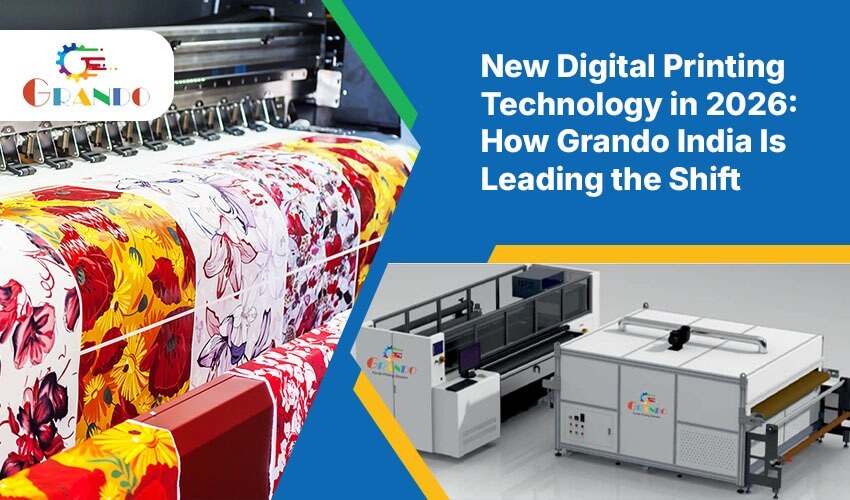
Textile manufacturing in India has moved fast over the last few years, and 2026 is shaping up as a turning point for how factories in Surat and across Gujarat approach production. The new digital printing technology entering the market isn’t just about faster machines — it’s changing how businesses manage cost, colour accuracy, and turnaround. Here’s what’s actually shifting, and how Grando India is applying it on the shop floor.
Why Digital Printing Technology Matters More in 2026
The role and significance of digital technology in textile production has moved beyond novelty. Order books today mix small-batch customisation with bulk export runs, and manufacturers need equipment that handles both without retooling. That shift is exactly what’s driving the current wave of digital printing technology upgrades across sublimation, DTF, and embroidery machinery.
Five Technology Shifts Defining Textile Printing This Year
1. Variable Drop Technology for Sharper Detail
Variable drop printheads adjust ink droplet size mid-print — smaller drops for fine detail, larger drops for solid fills — instead of firing a fixed droplet size throughout. This reduces visible banding and improves image sharpness without slowing production. It’s one of the clearest examples of new digital printing technology that directly affects finished print quality rather than just machine speed.
2. CISS-Based Ink Delivery for Production Stability
Continuous Ink Supply Systems (CISS) have become standard on higher-output sublimation printers, replacing smaller cartridge-based setups. A stable, uninterrupted ink feed reduces mid-run stoppages and colour inconsistency — a meaningful gain for units running long shifts.
3. Tighter Color Management (CMS/ICC Workflows)
Accurate colour reproduction across fabric batches remains a major recurring cost in textile printing — reprints from colour drift can quickly reduce margins. CMS and ICC-based colour profiling help manufacturers maintain consistent output across different fabric lots and print runs, which matters as export buyers demand tighter colour tolerance.
4. Multi-Fabric Flexibility Through Film-Based Transfer
As covered in our guide on DTF printing with belt and powder-shaker systems, film-based transfer technology is closing the gap between garment and fabric printing — a single production line can now serve cotton, polyester, and blended orders without switching processes.
5. Automation in Feed, Powder, and Curing Stages
Automatic belt-feed systems, powder-shaking units, and multi-stage heating are reducing the manual handling that once bottlenecked digital printing lines. This is where textile printing automation earns its return — not from the print step itself, but from everything around it.
How Grando India Applies This in Practice
Grando India’s equipment lineup — from multi-head sublimation printers to DTF systems with automatic belt and powder-shaker units — follows these principles: stable ink delivery, accurate colour management, and production lines that don’t need to stop for fabric changeovers. Based in Surat, Grando works with textile and garment manufacturers across Gujarat and India, matching machine specifications to real production needs.
For manufacturers evaluating an upgrade, our related reads on high-speed sublimation printing with CISS and variable drop technology in digital textile printing go deeper into the specifics covered above.
What This Means for Your Production Line
None of these shifts require replacing an entire setup overnight. Most manufacturers adopt new digital printing technology incrementally — upgrading ink delivery first, then colour management, then automation — based on where their current bottleneck sits. Identifying that bottleneck is the first real step before any equipment decision.
Key Considerations Before Choosing New Digital Printing Technology
Before investing in new equipment, manufacturers should review their current production process. Start by identifying where delays occur most often. Check ink usage, colour consistency, fabric handling, and manual processes. These factors can reveal the right area for improvement.
Production volume also plays an important role. A machine designed for high-volume output may not suit every business. Smaller manufacturers may benefit more from flexible systems. Growing businesses should also consider future production requirements.
Fabric type is another important factor. Different fabrics may require different printing or transfer methods. The right machine should support the materials used in regular production. This can help reduce unnecessary process changes.
Automation should also match the production setup. Automatic feeding and powder handling can reduce repetitive manual work. Better workflow control can also improve production consistency. These improvements can make a noticeable difference during long production runs.
Grando India helps manufacturers evaluate these factors before selecting equipment. The focus is on practical production needs, machine capabilities, and future growth. This approach helps businesses choose technology that fits their actual workflow.
Frequently Asked Questions
Q1) What is the newest digital printing technology in textile manufacturing?
Ans: Variable drop printheads, CISS-based ink delivery, and automated multi-fabric transfer systems are the most significant technology shifts in 2026, improving detail, stability, and production flexibility.
Q2) Why does color management matter in digital textile printing?
Ans: Colour drift between production batches causes costly reprints and buyer rejections. CMS/ICC-based colour profiling keeps output consistent across fabric lots and print runs.
Q3) Is digital printing technology replacing traditional textile printing methods?
Ans: It’s replacing methods where speed, customisation, and colour precision matter most, but traditional processes still hold ground for certain bulk, low-detail applications.
Q4) How does automation improve digital printing production?
Ans: Automating feed, powder application, and curing stages removes manual bottlenecks around the print step, increasing overall line throughput without changing the print technology itself.
Q5) Where is Grando India based and what technology does it offer?
Ans: Grando India is based in Surat, Gujarat, offering sublimation, DTF, and embroidery machines built around variable drop printing, CISS ink delivery, and CMS/ICC colour management.
Want to see which of these technologies fits your production line?
Get a technology walkthrough tailored to your current setup and output goals.
Schedule a consultation with Grando India’s technical team in Surat.