
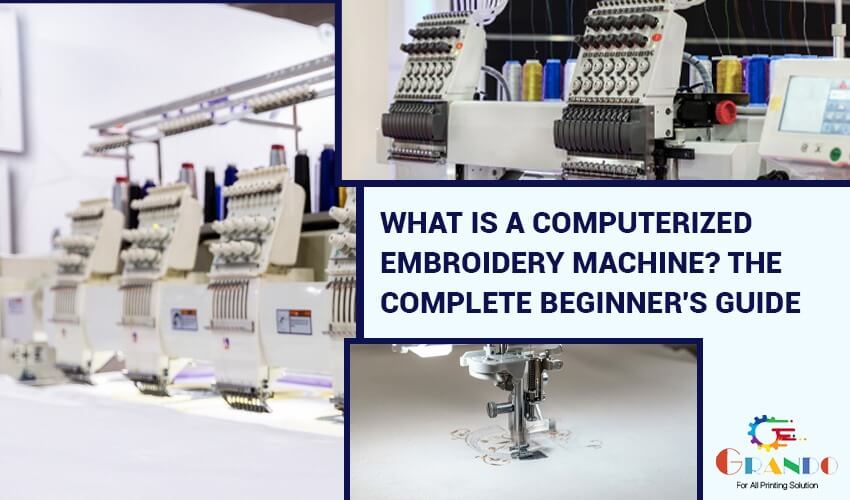
Introduction: Understanding the Computerized Embroidery Machine
If you’ve ever seen a perfectly stitched logo on a uniform or a detailed design on a jacket, it was likely created using a computerized embroidery machine. In this computerized embroidery machine guide, we’ll explain how these machines work and why they’re widely used in the textile industry. These machines have completely changed the way embroidery is done. What once required hours of careful hand stitching can now be completed quickly, accurately, and consistently with the help of digital technology.
For beginners, the idea of combining computers with embroidery may sound complicated. But in reality, modern embroidery machines are designed to make the process easier, not harder.
Whether you want to start a small embroidery business or expand a garment production unit, understanding how these machines work is the first step. If you’re exploring professional equipment options, you can also look at modern computerized embroidery machines here.
What Exactly Is a Computerized Embroidery Machine?
A computerized embroidery machine is an advanced sewing machine that uses digital files to stitch designs onto fabric automatically. Instead of manually guiding the needle, the machine follows a pre-programmed pattern created using embroidery software.
You simply load the design, place the fabric in a hoop, select your settings, and let the machine stitch. It handles the movement, speed, and stitch placement with impressive precision.
This technology allows you to produce complex logos, monograms, decorative artwork, and branding elements that would be extremely time-consuming to create by hand.
A Very Quick History
Embroidery is thousands of years old — but it was done entirely by hand until the 19th century, when mechanical embroidery machines arrived in Europe. Those machines were faster than handwork, but still rigid and limited.
The real revolution came in the 1980s and 1990s, when computer technology merged with embroidery machinery. Suddenly, a machine could read a digital file and reproduce any design imaginable — consistently, repeatedly, and at high speed. That changed everything for the fashion, textile, and garment industries forever.
How Does a Computerized Embroidery Machine Actually Work?
The process is simpler than it sounds:
Step 1 — Design Creation: A graphic designer or digitizer creates (or converts) an artwork into an embroidery file format (like DST or EXP). This file tells the machine exactly where each stitch goes, what color thread to use, and in what sequence.
Step 2 — File Transfer: The design file is transferred to the machine via USB, memory card, or direct software connection.
Step 3 — Machine Execution: The machine reads the file and automatically moves the fabric frame in precise X-Y directions while the needle stitches the design — color by color, element by element — until the complete design is finished.
Main Parts You Should Know
Understanding the basic parts will make the machine feel less intimidating.
- Needle System
The needle creates the stitches. Some machines use a single needle, while others have multiple needles for different thread colors.
- Embroidery Hoop
This holds the fabric tightly in place so it doesn’t move during stitching.
- Control Panel or Touchscreen
This is where you choose designs, adjust size, change speed, and monitor progress.
- Motor and Drive Mechanism
This controls the movement of the needle and hoop with high precision.
- Thread Tension System
This ensures smooth and balanced stitching without loose or tight threads.
Each component works together to produce clean, detailed embroidery.
Manual vs. Computerized Embroidery: What’s the Difference?
Manual embroidery depends on hand control and skill. While it has artistic charm, it takes time and practice.
Computerized embroidery, on the other hand, focuses on automation and efficiency. You don’t need advanced stitching skills to create professional designs. The machine does most of the technical work for you.
For businesses that require bulk production and consistent branding, computerized embroidery machines are a practical solution.
Types of Computerized Embroidery Machines
Single-Needle Machines
Single-needle machines are ideal for beginners and small businesses. They handle one thread color at a time, making them perfect for smaller projects and custom work.
Multi-Needle Machines
Multi-needle machines are built for commercial use. They can switch between multiple thread colors automatically, saving time and increasing productivity. These machines are commonly used in garment factories and large embroidery units.
Choosing the right type depends on your production volume and plans.
If you want to explore different embroidery machine solutions used in the textile and garment industry, you can visit the Grando to see the available products and technologies.
Why Businesses Prefer Computerized Embroidery Machines
There are clear advantages to using these machines:
- Faster production time
- Consistent design quality
- Reduced manual effort
- Ability to handle complex patterns
- Professional-looking results
For branding purposes, embroidered logos and designs add durability and a premium finish to garments. This makes them popular for uniforms, promotional apparel, and corporate merchandise.
Who Can Benefit From Using One?
Computerized embroidery machines are suitable for:
- Garment manufacturers
- Textile businesses
- Uniform suppliers
- Fashion designers
- Promotional product companies
- Home-based entrepreneurs
Whether you’re running a small startup or a large production unit, these machines can support your growth.
Important Features to Look for as a Beginner
If you’re planning to buy your first machine, consider these features:
- Built-in embroidery designs
- USB connectivity
- Adjustable stitching speed
- Automatic thread cutting
- User-friendly touchscreen
- Multiple hoop sizes
- Reliable warranty and support
Choosing a machine with these features will make learning easier and improve your overall experience.
Common Uses in the Garment and Textile Industry
Computerized embroidery machines are widely used for:
- Corporate logos on uniforms
- School and college apparel
- Sports team branding
- Monogrammed gifts
- Custom fashion pieces
- Promotional merchandise
Their flexibility allows businesses to serve a wide range of customer needs.
Tips Before Buying Your First Machine
Before making a decision:
- Define your business goals
- Set a practical budget
- Compare machine specifications
- Ask for a product demonstration
- Check customer reviews and service support
Taking time to research ensures you choose a machine that fits your needs.
Conclusion
A computerized embroidery machine combines creativity with technology, making professional embroidery accessible to beginners and businesses alike. It simplifies complex stitching, increases production speed, and delivers consistent results. Whether you want to start a new venture or upgrade your existing setup, investing in the right embroidery machine can open doors to new opportunities and long-term growth. With the right knowledge and preparation, stepping into the world of digital embroidery becomes an exciting and rewarding journey.
If you need help choosing the right embroidery machine for your business, you can always contact our team for guidance or product information.
Frequently Asked Questions
1. Do I need technical knowledge to operate a computerized embroidery machine?
Ans: No, you do not need advanced technical knowledge to operate a computerized embroidery machine. Most modern embroidery machines include user-friendly controls and guided settings, making them easy for beginners to learn and use efficiently.
2. Can I use custom designs?
Ans: Yes, you can create or download designs and upload them to the machine.
3. Are computerized embroidery machines expensive?
Ans: Prices vary depending on the machine’s features, production capacity, and additional attachments. The cost can also increase based on add-ons such as bead embroidery devices, multi-sequin systems, 3 cording devices, and laser devices, with options available to suit different budgets and business needs.
4. What kind of maintenance is required?
Ans: Regular cleaning, oiling, and proper thread handling help maintain performance.
5. Is it suitable for small businesses?
Ans: Absolutely. Many small businesses successfully use these machines for branding and customization services.