
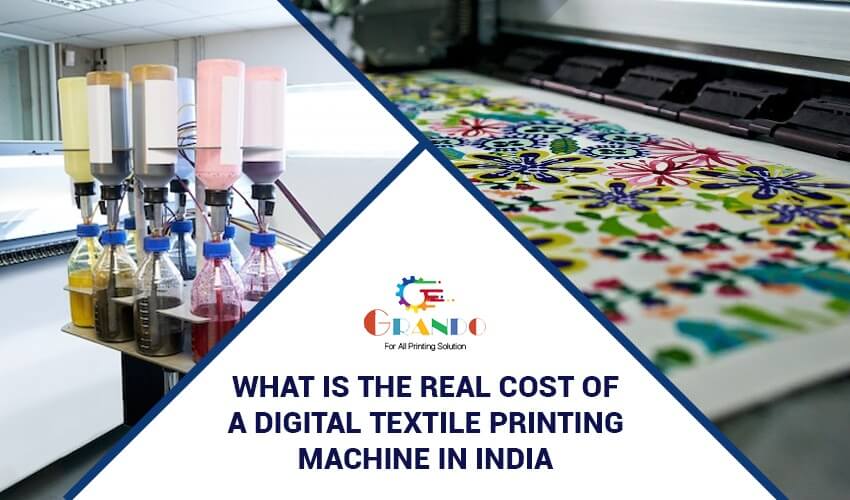
If you’ve been researching a Digital Textile Printing Machine in India, you’re likely evaluating a serious business investment — not casually comparing equipment.
Here’s a reality many buyers discover only after purchase:
The lowest-priced machine rarely delivers the lowest operating cost.
And the most expensive machine doesn’t automatically produce the highest returns.
Smart manufacturers ask a more strategic question:
Which Digital Textile Printing Machine in India can scale with my business without requiring replacement in three to five years?
In competitive textile hubs like Surat, where businesses frequently search for a reliable digital printing machine Surat manufacturers can depend on, turnaround speed, ink efficiency, and service support directly influence profitability. Choosing the right Digital Textile Printer in Surat, therefore, becomes a growth decision, not just a purchase.
Introduction to Digital Textile Printing Investments
Digital printing has reshaped textile manufacturing. What once required bulk production and heavy inventory can now be executed with precision and flexibility using a Digital textile fabric printing machine.
But purchasing the machine is only the beginning — long-term profitability depends on understanding the complete financial picture.
Why Buyers Are Thinking Beyond Price
Experienced buyers evaluate machines based on lifecycle cost rather than sticker price. A slightly higher initial investment often leads to lower operational expenses, better efficiency, and longer usable life.
The Shift Toward Strategic Equipment Purchasing
Forward-looking businesses treat printing equipment as production infrastructure. The objective is not simply to print fabric — it is to build scalable capacity that supports expansion.
Digital Textile Printing Machine Price in India
When evaluating a Digital Textile Printing Machine in India, pricing typically depends on:
-
Print width and speed
-
Automation level
-
Ink technology
-
Fabric compatibility
-
Service ecosystem
The Digital textile fabric printing machine price varies significantly across segments.
Entry-Level Machines
Investment Range: ₹8 lakh – ₹18 lakh
Designed for sampling, boutique production, and small-batch work. Many buyers searching for a digital textile printer in Surat for startups begin in this category.
Who Should Consider Them?
- Design studios
- Boutique fabric brands
- Small custom-order businesses
- Early-stage manufacturers
These machines fulfill specialized roles effectively, but scaling production may require upgrading sooner than expected.
Mid-Range Scalable Textile Printing Machines
Investment Range: ₹18 lakh – ₹45 lakh
This category attracts growth-focused manufacturers looking for scalable textile printing machines that balance cost with performance.
Key Performance Advantages
- Higher throughput capacity
- Improved ink efficiency
- Compatibility with multiple fabrics
- Lower production cost per meter
For many expanding businesses, this segment offers the best ROI when investing in a Digital Textile Printing Machine in India.
Industrial Digital Textile Printers
Investment Range: ₹45 lakh – ₹1.5 crore+
These high-speed solutions are built for continuous operation and export-grade production. Though the Digital textile fabric printing machine price is higher, utilization at scale significantly improves margins.
When High Investment Makes Sense
- Export-oriented manufacturing
- Large fashion supply chains
- Contract production facilities
- Businesses operating near full capacity
While the upfront investment is higher, strong utilization can significantly accelerate return on investment.
Understanding Total Cost of Ownership
The purchase price represents only one component of the overall investment. Operational factors often have a greater impact on profitability over time.
-
Ink Consumption Efficiency
Ink is a recurring expense; however, machines engineered for efficient usage and high-quality sublimation printer ink can generate substantial annual savings.
-
Maintenance and Service Support
Downtime affects revenue more than most buyers anticipate. Partnering with established digital textile printer manufacturers ensures access to trained technicians and genuine parts.
-
Power Consumption
Energy-efficient machines quietly improve margins month after month by lowering operating costs.
-
Operator Training and Automation
Automation simplifies workflows, reduces dependency on specialized labor, and minimizes production errors.
-
Software and Workflow Costs
Color management tools, RIP software, and workflow systems are essential for maintaining output quality and operational efficiency.
Hidden Costs Manufacturers Often Overlook
Even well-planned investments can face unexpected expenses if these factors are ignored.
-
Production Downtime
Every hour of inactivity affects output and profitability.
-
Spare Parts Availability
Quick access to replacement components prevents extended operational interruptions. Investing in high-quality sublimation printer spare parts is essential for maintaining maximum uptime and machine longevity.
-
Fabric Compatibility Limitations
Machines capable of handling a wide range of fabrics enable businesses to explore more extensive market opportunities.
-
Upgrade Restrictions
Upgrade-friendly systems help extend equipment lifespan and delay large future expenditures.
Many buyers now prefer Made in India textile printing machines due to easier access and faster localized engineering adaptation.
Which Machine Supports Long-Term Scaling?
Businesses expecting growth should evaluate machines with future capacity in mind.
-
Upgrade-Friendly Systems
Modular designs allow performance enhancements without replacing the entire unit.
-
Speed vs Stability
Consistent performance is often more valuable than peak speed claims.
-
Automation That Reduces Labor Dependence
Automation supports predictable output and simplifies scaling production.
Choosing the Right Digital Textile Printer in Surat
Location plays a practical role in operational continuity.
Why Local Service Infrastructure Matters
Nearby technical support can shorten installation timelines, simplify training, and reduce production risk.
Faster Installation and Technical Support
Quicker setup enables earlier production and faster revenue generation for businesses using a Direct to Fabric Digital Printer in Surat.
Reducing Operational Risk
Accessible service networks provide operational reassurance when schedules are tight.
Best Machines for Startups & Small Businesses
New businesses benefit from equipment that balances affordability with genuine growth potential.
Balancing Cost and Capability
Selecting a machine solely for its low price often leads to higher long-term expenses. Instead, explore solutions from trusted digital textile printer manufacturers offering scalable models.
Features That Actually Matter
Prioritize:
- Reliable print quality
- Controlled ink usage
- Manageable maintenance
- Multi-fabric capability
- Consistent production speed
Short-term savings should not create long-term operational constraints.
Is Digital Textile Printing Profitable for Small Businesses?
In many cases, yes — especially when production capacity is used efficiently.
- On-Demand Production Advantage
Manufacturing against confirmed orders reduces waste and improves cash flow.
- Faster Sampling, Faster Decisions
Quick sampling helps businesses respond to market trends with greater agility.
- Lower Inventory Risk
Producing smaller batches limits unsold stock and storage costs.
Which Digital Textile Printer Is Most Profitable?
Profitability is typically determined by operational alignment rather than brand positioning. When utilized correctly, a Digital Textile Printing Machine in India can deliver strong margins.
-
Uptime and Reliability
Consistently running equipment supports predictable revenue.
-
Color Consistency
Accurate color reproduction reduces costly reprints.
-
Production Efficiency
Efficient machines transition from expense to productive asset over time — particularly when sourced from reliable digital textile printer manufacturers.
Benefits of Switching to Digital Printing
Many textile businesses are modernizing their production for good reason — operational advantages accumulate.
- Operational Agility: Digital systems handle both short runs and bulk orders effectively.
- Waste Reduction: Printing based on demand minimizes material loss.
- Client Satisfaction and Retention: Reliable turnaround strengthens long-term business relationships.
How to Calculate ROI Before Buying
Careful financial evaluation supports better decision-making.
-
Cost Per Meter Analysis
Understanding production cost per meter provides clarity on margins.
-
Break-Even Timeline
Estimate how long it will take to recover the Digital textile fabric printing machine price through production revenue.
-
Revenue Expansion Opportunities
Expanded capabilities often attract new customer segments.
Common Mistakes Buyers Make
Avoiding these pitfalls can protect both capital and operational stability.
- Choosing Based Only on Price: A lower upfront Digital textile fabric printing machine price does not always translate to better value.
- Ignoring Service Networks: Delayed support can disrupt production schedules.
- Underestimating Growth: Planning for future demand helps prevent premature equipment replacement.
Many manufacturers searching for Affordable textile digital printing machine suppliers near me later realize that support strength outweighs minor price differences.
Working with the best textile printing machine manufacturer in India provides long-term operational confidence.
Future Trends in Digital Textile Printing
The industry continues evolving with technology-driven improvements.
- Automation: Smart production environments are becoming increasingly common.
- Eco-Friendly Ink Technologies: Sustainable processes are gaining importance across global markets.
- Smart Production Systems: Data-driven workflows enhance efficiency and reduce waste.
Final Thoughts
Investing in a Digital textile fabric printing machine is ultimately about strengthening production capability — not just acquiring equipment.
When businesses evaluate scalability, operational costs, service reliability, and long-term performance, they position themselves for sustainable growth with the right Digital Textile Printing Machine in India.
Whether you are comparing digital textile printer manufacturers, exploring Made in India textile printing machines, or searching online for Affordable textile digital printing machine suppliers near me, the smartest investment is one aligned with your future production trajectory.
The right equipment does more than print fabric — it builds operational resilience and prepares your business for rising demand.
Ready to Explore the Right Digital Textile Printer?
For textile businesses planning their next phase of expansion, investing in appropriate digital printing technology is less a purchase and more a strategic positioning decision.
Whether you need a high-performance Digital Textile Printer in Surat or guidance from the best textile printing machine manufacturer in India, making an informed decision today protects your growth tomorrow.
Contact Grando to discover digital printing technology engineered for modern textile operations.
Because informed investments don’t just support growth—they enable it.
Your next phase of expansion may begin with choosing equipment built not just for today’s workload — but for tomorrow’s opportunities.
FAQs
1. What are the 2 main printers?
Ans: The two primary textile printers are Direct-to-Fabric printers and Sublimation printers. A Direct to Fabric Digital Printer in Surat is commonly used for cotton and silk, while sublimation works best on polyester fabrics.
2. How many types of printing machines are there?
Ans: The most widely used include Digital Textile Printing Machine in India, sublimation printers, and screen printing machines. Among these, digital machines are becoming the industry standard due to speed, flexibility, and reduced waste.
3. Is digital printing a good business?
Ans: Yes — digital textile printing can be highly profitable when machines are utilized efficiently. Growing demand for customized fabrics, fast fashion cycles, and smaller production runs make digital printing a strong long-term business opportunity.